
Recently listed companies scored 54, compared to 58 for the BSE100 firms and 61 for entities in the Sensex pack. The report noted that issues remain in IPO companies in which there seems to be a need to institutionalise governance practices.

Ghost beneficiaries aren't the only kind of issue companies face during a period of unprecedented CSR spending, touching nearly Rs 12,000 crore in 2018-19. Frauds related to procurement, construction, and end-use of funds have had companies engaging forensic auditors to keep tabs on how money is spent, revealed conversations with those involved in such investigations. Firms are also increasingly strengthening their own capabilities to better implement their programmes.

The biggest spend (Rs 4,406 crore) was for Schedule VII (II), which involves "promoting education, including special education and employment enhancing vocation skills, especially among children, women, elderly and the differently abled and livelihood enhancement projects". The FY19 spend was 17.2 per cent higher than Rs 1,0128.3 crore spent during the previous year.

Maruti is sticking to this strategy at a time when rival Hyundai is looking to make the most of the monopoly it will have in the compact diesel segment from April 1, 2020, when the BSVI emission norms kick in. The market leader's confidence stems from the rapid shift in favour of petrol in the PV segment. For newer models such as MG Hector and Seltos, nearly 75 per cent bookings are for petrol variants, Kia has 55 per cent from petrol variants. The change in customer preference from diesel variants to petrol has happened quickly over the past few years.

Indian funds did better than Asian ones in only four of the 10 months -- till October. Despite much market optimism, presumably around policy interventions and guided by buoyant flows, India's macro backdrop may be turning for the worse.

This will ensure its vehicles reach dealers much faster and delivered to buyers in a maximum of three days, reports Shally Seth Mohile.

Primary steel producers in the domestic market have raised product prices by 2.5 to 3 per cent for December to address margin compression and in anticipation of a demand pick-up.

The entire range of Hyundai's diesel cars - from compact ones to SUV models, including the soon-to-be-launched Aura - will be eco-friendly.

Let alone a discount, they might not even get the model, variant or colour of choice in BS-IV-compliant vehicles.

Lower cost and easier termination may well be among the reasons that companies seek to have employees on contract. The share of employees on contract has increased to 57.3 per cent of the total workforce this year as compared to 53.7 per cent in the previous year.

The lack of a strong diversity policy on the part of companies, a limited pool of women candidates as well as socio-cultural factors contribute to their low numbers.

The growth in the PV segment was primarily led by car market leader, Maruti Suzuki India, which saw its dispatches to dealers grow 4.4 per cent YoY to 144,277 units after 10 months of drop. It was driven by new launches, such as the S-Presso, a mini sport UV.

While Rakesh Jhunjhunwala is up 14.9% during the year to Rs 12,381 cr, Ashish Dhawan is up 68.4% to Rs 810 cr, Ashish Kacholia is down 23.4% to Rs 515 cr, Rajiv and Dolly Khanna are down 74.6% to Rs 116 cr and Vijay Kedia is down 6.2% to Rs 294 cr.

The biggest spender was Tata Motors, with Rs 4,224.6 crore assigned under the R&D head.

Cleartrip acquired Saudi travel firm Flyin last July and it provides bilingual ground support service and itineraries for inbound tourists.

Mahindra is the latest among a clutch of other manufacturers that have been using services, fuel efficiency and packages as unique selling proposition. Sales of Mahindra's heavy trucks dropped to 3,427 units in the eight months from April to September.

Session-wise data indicates small investors have taken money off the table in more sessions than they have pumped in additional capital.

Around 41 per cent of these companies saw such instances, compared to the global average of 29 per cent. India's number is higher than other countries such as the United States (26 per cent), the United Kingdom (32 per cent) and Japan (27 per cent). It is also worse than other emerging markets. China had 39 per cent of firms affected by data theft. It was 19 per cent and 16 per cent for Brazil and Russia, respectively.
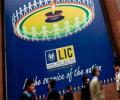
This is despite the private sector companies outperforming their public sector counterparts, reports Sachin P Mampatta.
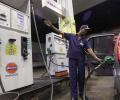
After the latest spike in crude oil prices, petrol prices could potentially go up to around Rs 90 a litre making a dent in the consumer's wallet. This, the analysts fear, will push the cost of vehicle ownership in the country, further reducing the demand potential for the industry.
 © 2026 Rediff.com - Advertise with us - Disclaimer - Privacy Policy - Sitemap - Feedback - About us - Terms of use - Grievances